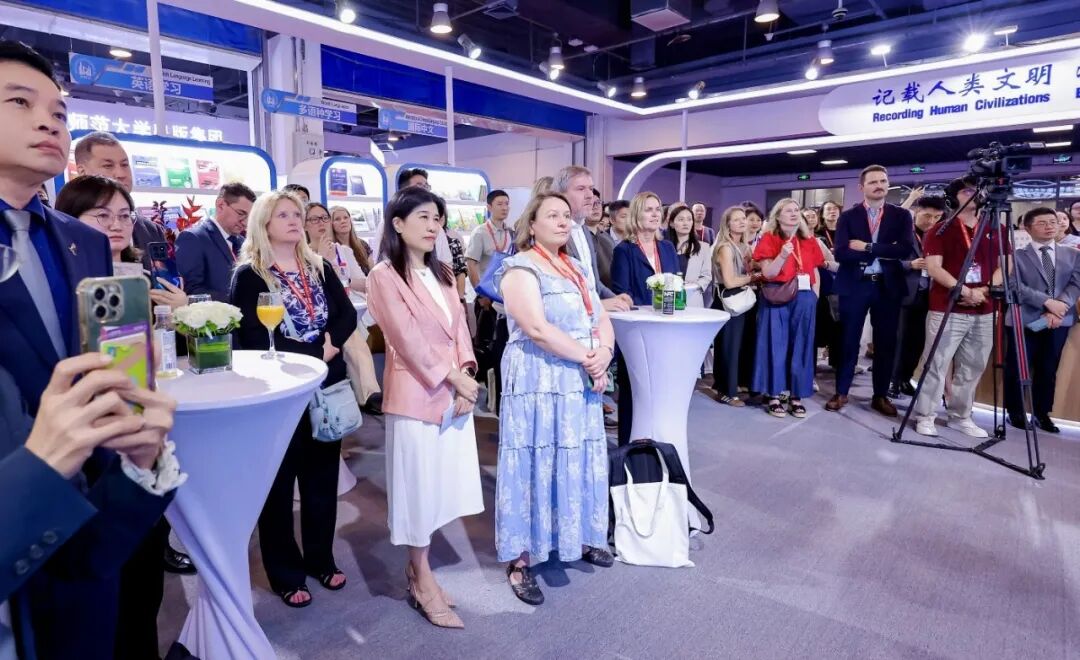
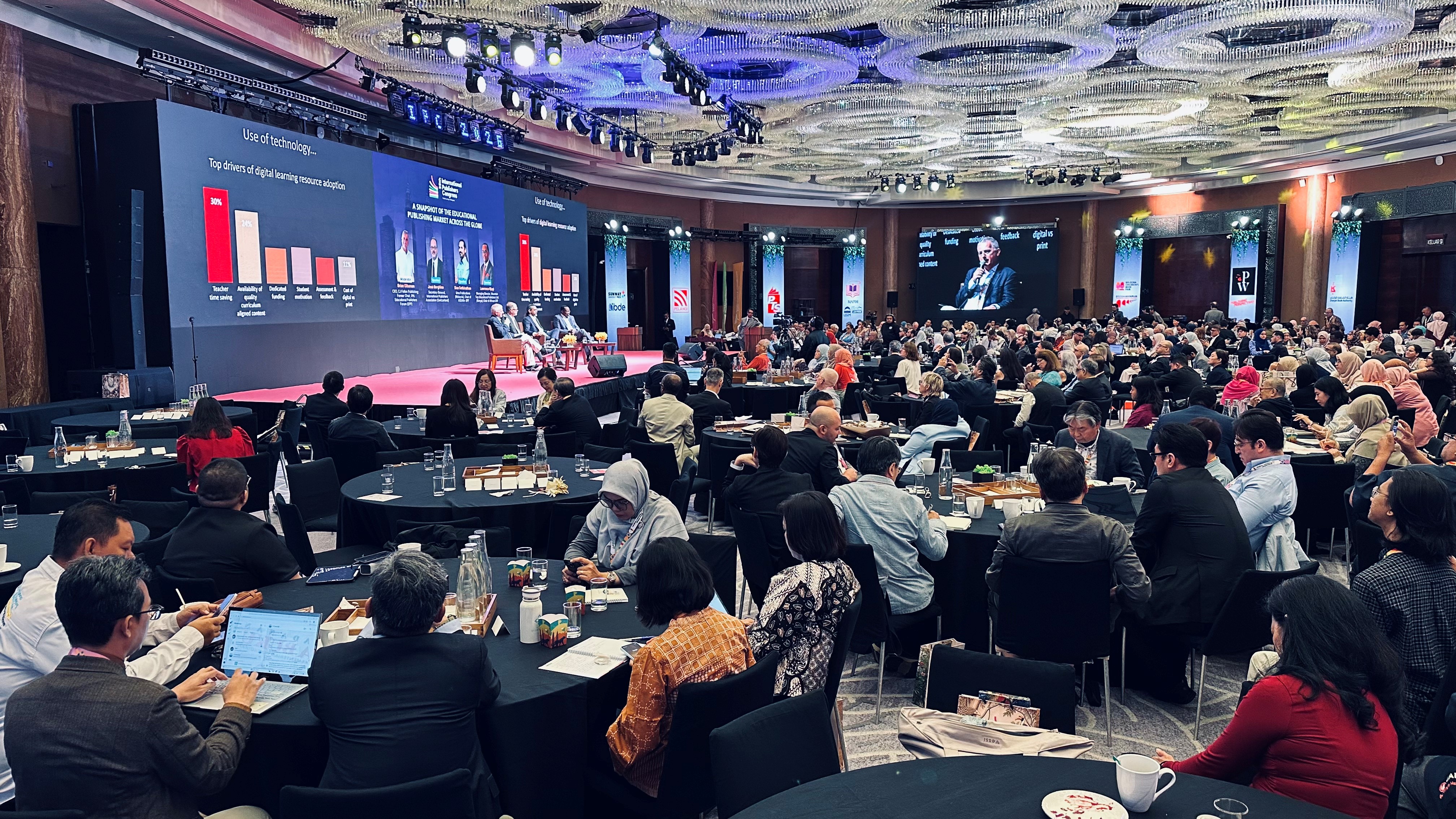
From July 6 to 7, 2026, the 35th International Publishers Congress was held in Kuala Lumpur, Malaysia. Organized by the International Publishers Association (IPA) and hosted by the Malaysian Book Publishers Association (MABOPA), the Congress was held under the theme “Publishing Intelligence, Sustaining Forward” and attracted over 500 publishing industry representatives from 43 countries and regions worldwide. Wang Fang, Secretary of the CPC Committee and Chair of the Board of FLTRP Group, and President of FLTRP, attended the Congress as a member of the Chinese Publishers Association delegation.
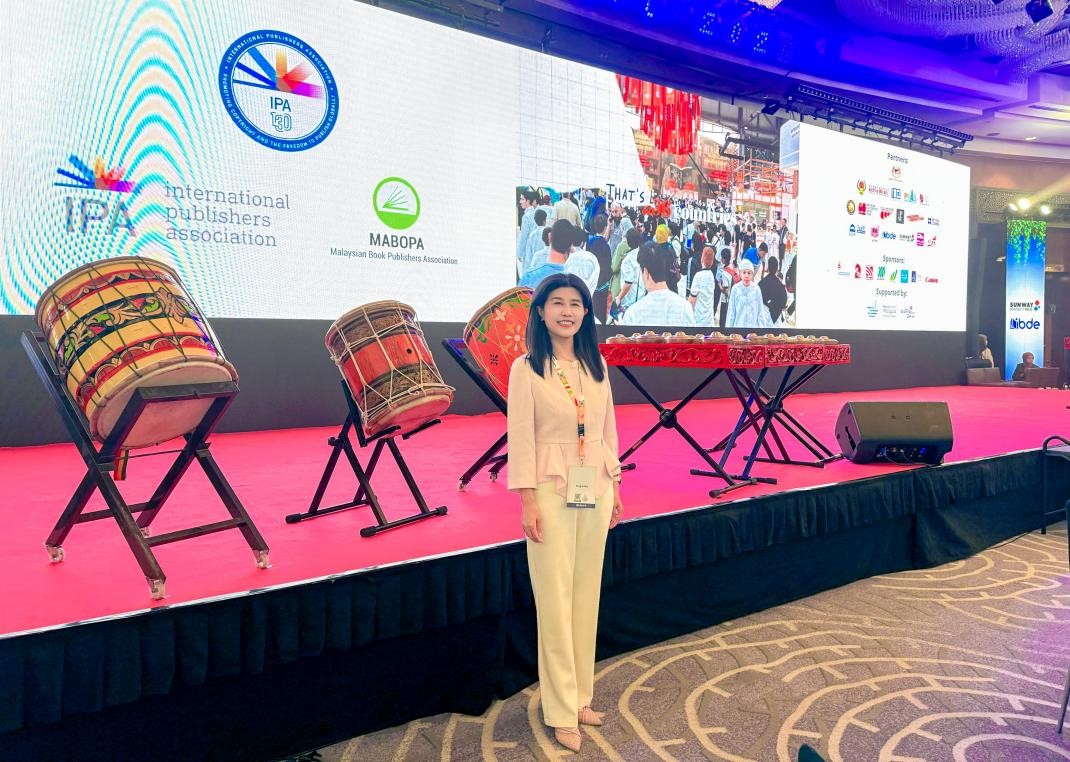
The Congress covered a rich and diverse range of topics, including educational publishing innovation, language and cultural preservation, Southeast Asian market development, nationwide reading promotion, accessible publishing, the publishing industry’s contribution to the UN Sustainable Development Goals, cross-media IP adaptation, and other fields. Notably, the governance and application of artificial intelligence ran through the entire agenda, becoming the central focus of discussions. Sheikh Faisal Sheikh Mansor, President of MABOPA, noted in his address that despite the profound changes of our times, publishers’ original mission of connecting the public through knowledge, ideas, and stories remains unchanged. Gvantsa Jobava, President of the IPA, emphasized in her opening speech that every book has unique value; the diverse knowledge and humanistic ideas produced by the publishing industry constitute the highest-quality training data for AI, and for AI to realize its developmental potential, it must be rooted in the quality content created by publishers worldwide.
Multiple industry experts shared in-depth insights on AI implementation practices, publishing ethics, and copyright governance. Participants generally agreed that AI is essentially a medium and tool serving content production, and that the initiative remains firmly in the hands of publishing professionals. The industry has moved beyond the phase of novelty-driven observation and now urgently needs to explore compliant and responsible implementation pathways. The industry consensus is that rather than blindly avoiding or resisting new technologies, we should uphold human-machine collaboration and guide technological application with humanistic values; high-quality original content is the core pillar of AI’s sustainable development, and the use of publications for AI training must strictly comply with copyright norms and obtain proper authorization. Furthermore, the global publishing community needs to collaboratively build a unified governance framework to jointly address challenges brought by technological change, such as AI hallucinations and regional development imbalances.
During the Congress, President Wang Fang engaged in extensive exchanges with representatives from relevant UN agencies, leaders of the IPA and MABOPA, publishing organization representatives from Africa, Latin America, Southeast Asia, and other countries and regions, as well as representatives of prominent Malaysian enterprises. The parties had in-depth discussions on industry hot topics such as AI-empowered publishing, and on international collaboration mechanisms such as the establishment of a China-Africa Publishing Alliance, further expanding FLTRP’s international network of partners.
President Wang Fang stated that the Congress provided a high-level dialogue platform for the global publishing industry, serving as an important opportunity to gauge the industry’s pulse and gain insights into global trends. This participation not only provided access to cutting-edge information but also fully showcased FLTRP’s innovative achievements and cooperation vision in language education and digital intelligence to international peers. Going forward, FLTRP will seize the opportunities of the times, adhere to the dual drive of digital intelligence and internationalization, deepen its presence in key markets such as Southeast Asia, the Middle East, and Africa, actively build a new ecosystem for international publishing and education, and achieve mutual empowerment and win-win cooperation between Chinese and international partners.
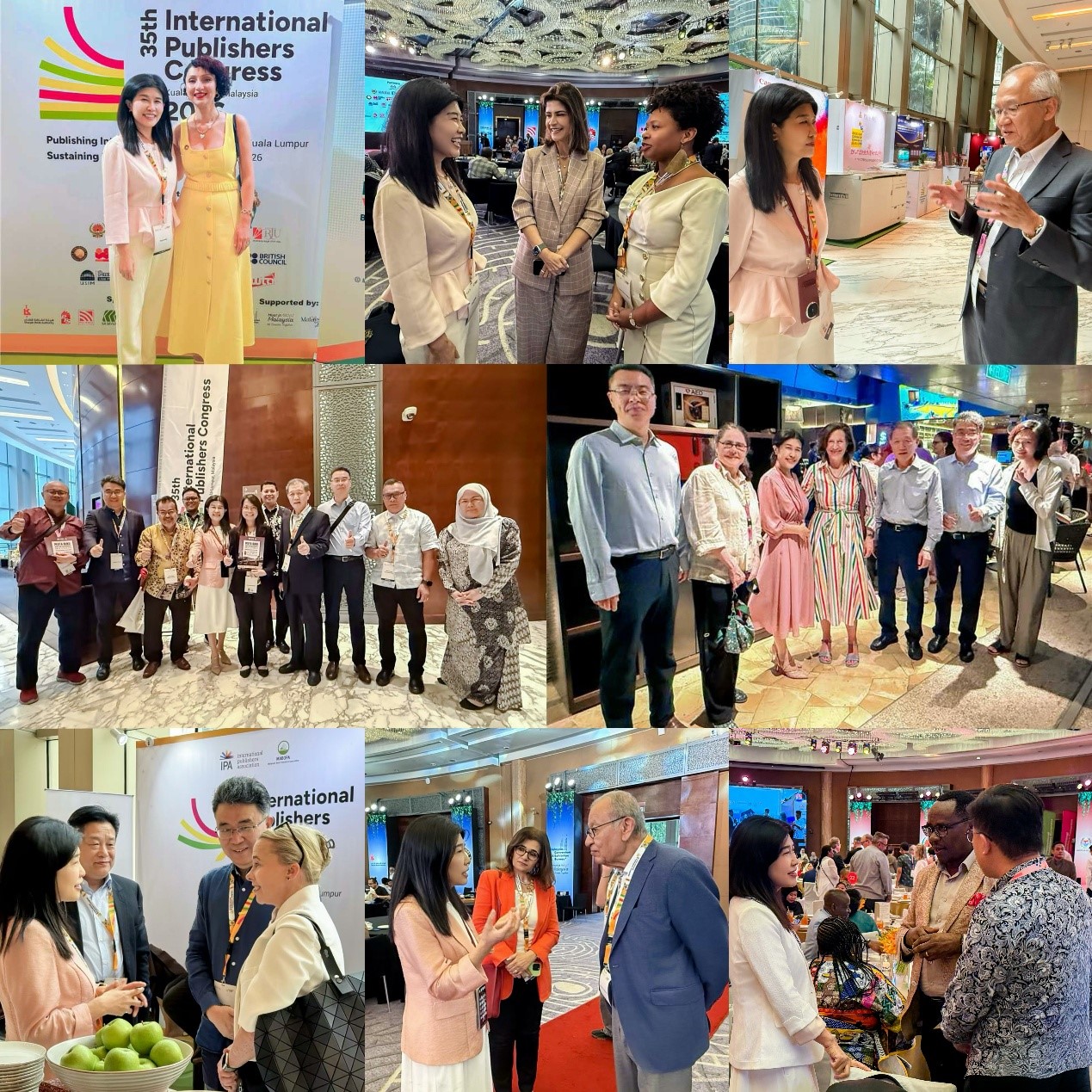
From left to right, top to bottom:
1. Gvantsa Jobava, President of the IPA
2. Karina Pansa, Past President of the IPA (center)
3. Law King Hui, Head of Malaysia’s Sasbadi Publishing Group
4. Sheikh Faisal Sheikh Mansor, President of MABOPA (third from left)
5. Melissa Fleming, United Nations Under-Secretary-General for Global Communications (fourth from left)
6. Emma House, Founder of the UK’s Oreham Group, and former Vice President of the UK Publishers Association (first from right)
7. Ibrahim El Moallem, Chairman of Egypt’s Dar El Shorouk (first from right), and Amira Aboulmagd, Managing Director (center)
8. Lawrence Njagi, Managing Director of Kenya’s Mountain Top Publishers, and Chair of the African Publishers Network (APNET) (center)
The International Publishers Congress is organized by the IPA and held biennially. It serves as an authoritative platform for the global publishing community to exchange ideas, learn from one another, and collectively address industry opportunities and challenges. The 36th International Publishers Congress will be held in Sharjah, United Arab Emirates, in 2028.
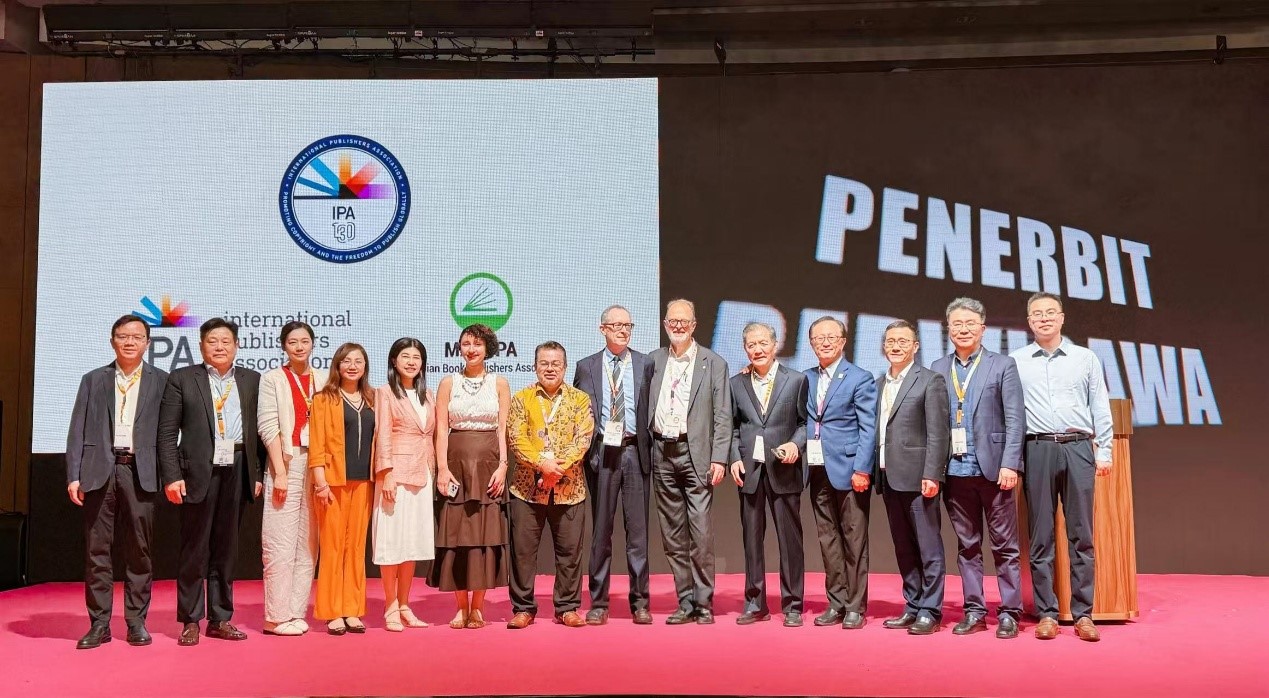
The Chinese Publishers Association delegation posing with the current President, Vice President, Secretary-General, the 2011–2014 President of the IPA, and the President of MABOPA